
Chinese National Standard for HDPE Bottles for Oral Solid Preparation (YBB00122002-2015)
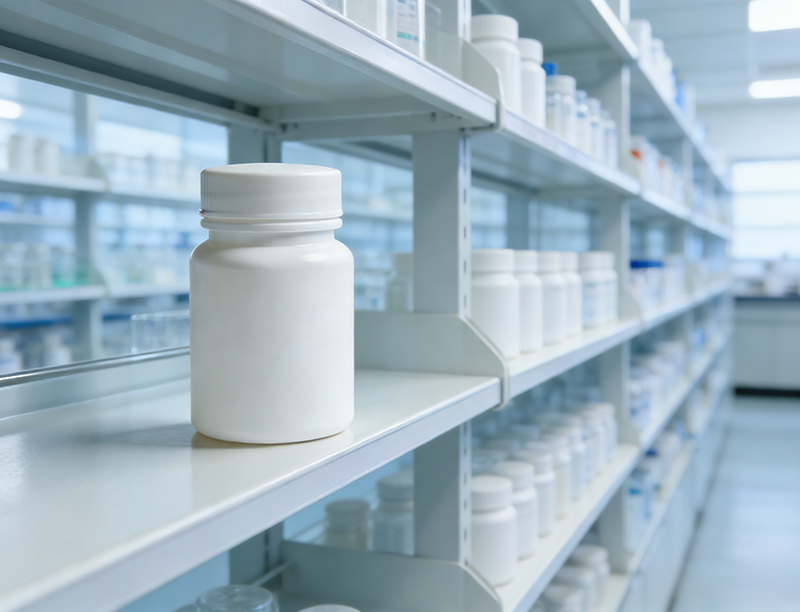
This standard applies to plastic bottles for oral solid preparations produced by the injection blow molding process, with high-density polyethylene (HDPE) as the main raw material.
Appearance
Take an appropriate quantity of the product and inspect visually under bright natural light, facing directly. The color shall be uniform and consistent, with no obvious color difference. The surface of the bottle shall be smooth and even, with no deformation or obvious scratches. There shall be no sand holes, oil stains, or bubbles. The bottle mouth shall be flat and smooth.
Identification
(1) Infrared Spectrum
Take an appropriate quantity of the product and determine according to Method IV of the Infrared Spectrophotometry for Packaging Materials (YBB00262004-2015). It shall be basically consistent with the reference spectrum.
(2) Density
Take 2 g of the product, add 100 ml of water, reflux for 2 hours, allow to cool, then dry at 80 °C for 2 hours. Determine according to the Density Determination Method (YBB00132003-2015). The density shall be 0.935–0.965 g/cm³.
Seal Integrity
Take an appropriate quantity of the product and place a suitable number of glass beads into each bottle. Tighten the cap securely (for test bottles with screw caps, tighten the bottle and cap using a torque wrench; the torque values are shown in Table 1). Place the bottles in a container equipped with a vacuum device, immerse them in water, and evacuate to a vacuum level of 27 kPa. Maintain for 2 minutes. There shall be no water ingress into the bottles and no bubbling observed.
|
Table 1 Torque Between Bottle and Cap |
|
|
Cap diameter (mm) |
Torque (N·cm) |
|
15-22 |
59-78 |
|
23-48 |
98-118 |
|
49-70 |
147-176 |
Oscillation Test
Take an appropriate quantity of the product and fill each bottle with acidic water as an indicator. Tighten the cap securely (for test bottles with screw caps, tighten the bottle and cap using a torque wrench; the torque values are shown in Table 1). Wrap bromophenol blue test paper (prepare by immersing filter paper in bromophenol blue test solution diluted fivefold, then remove and dry after thorough soaking) tightly around the neck of the bottle. Place the bottles in an oscillator (oscillation frequency: 200 ± 10 cycles per minute) and oscillate for 30 minutes. The bromophenol blue test paper shall show no color change.
Water Vapor Transmission Rate
Take an appropriate quantity of the product and determine according to Method III (2) of the Water Vapor Transmission Rate Determination Method (YBB00092003-2015) under conditions of 25 °C ± 2 °C and relative humidity of 95% ± 5%. The result shall not exceed 100 mg/(24 h·L).
Residue on Ignition
Take 2.0 g of the product and examine according to the prescribed method (General Rule 0841, Part IV, Chinese Pharmacopoeia 2015 Edition). The residue shall not exceed 0.1% (for bottles containing light-shielding agents, the residue shall not exceed 3.0%).
Extractables Test:
Preparation of Test Solutions
Take three portions of the product, each with an internal surface area of 600 cm² (cut into small pieces of 5 cm in length and 0.3 cm in width). Place each portion into a stoppered conical flask, add an appropriate amount of water, shake to wash the pieces, discard the water, and repeat this operation twice. After drying at 30–40 °C, immerse the pieces separately in 200 mL of water (70 °C ± 2 °C), 65% ethanol (70 °C ± 2 °C), and n-hexane (58 °C ± 2 °C) for 24 hours. Remove and allow to cool to room temperature, then make up to the original volume with the same batch of solvent used for the test to obtain the test solutions. Use the same batch of water, 65% ethanol, and n-hexane as blank solutions. Carry out the following tests:
Oxidizable Substances
Accurately measure 20 mL of the aqueous test solution, add accurately 20 mL of potassium permanganate titrant (0.002 mol/L) and 1 mL of dilute sulfuric acid, and boil for 3 minutes. Cool rapidly, add 0.1 g of potassium iodide, and allow to stand in the dark for 5 minutes. Titrate with sodium thiosulfate titrant (0.01 mol/L). Near the endpoint, add 5 drops of starch indicator solution and continue titration until colorless. Perform the same procedure with the aqueous blank solution. The difference in the volume of sodium thiosulfate titrant (0.01 mol/L) consumed by the two solutions shall not exceed 1.5 mL.
Non-Volatile Residue
Accurately measure 50 mL each of the aqueous, 65% ethanol, and n-hexane test solutions and the corresponding blank solutions, and place them into evaporating dishes that have been previously dried to constant weight. Evaporate to dryness on a water bath, then dry at 105 °C for 2 hours. After cooling, weigh accurately.
The difference between the non-volatile residue of the aqueous test solution and that of its blank solution shall not exceed 12.0 mg.
The difference between the non-volatile residue of the 65% ethanol test solution and that of its blank solution shall not exceed 50.0 mg.
The difference between the non-volatile residue of the n-hexane test solution and that of its blank solution shall not exceed 75.0 mg.
Heavy Metals
Accurately measure 20 mL of the aqueous test solution, add 2 mL of acetate buffer solution (pH 3.5), and examine according to the prescribed method (General Rule 0821, Method I, Part IV, Chinese Pharmacopoeia 2015 Edition). The heavy metal content shall not exceed 10 ppm (one part per million).
Microbial Limits
Take several bottles of the product, add sodium chloride injection solution to 1/2 of the nominal capacity, tighten the caps, and shake for 1 minute to obtain the test solution. After membrane filtration of the test solution, examine according to the prescribed methods (General Rules 1105 and 1106, Part IV, Chinese Pharmacopoeia 2015 Edition).
The total aerobic bacterial count shall not exceed 1,000 cfu per bottle.
The total combined molds and yeasts count shall not exceed 100 cfu per bottle.
Escherichia coli shall not be detected in any bottle.
Abnormal Toxicity*
Take several bottles of the product, wash them thoroughly with water, cut them into pieces, and take 500 cm² (based on internal surface area). Add 50 mL of sodium chloride injection solution and place in an autoclave at 110 °C for 30 minutes. Remove and allow to cool for later use. Use the same batch of sodium chloride injection solution as the blank. Administer by intravenous injection and examine according to the prescribed method (General Rule 1141, Part IV, Chinese Pharmacopoeia 2015 Edition). The results shall comply with the requirements.
Storage
For inner packaging, solid oral bottles shall be sealed in pharmaceutical-grade polyethylene plastic bags and stored in a dry and clean place.
Annex I Inspection Rules
1.Product inspection is divided into full inspection and partial inspection.
2.Full inspection shall be carried out in accordance with the requirements of this standard under any of the following circumstances:
(1) Product registration.
(2) Resumption of production after a major quality incident.
(3) Supervisory sampling inspection.
(4) Resumption of production after a production shutdown.
3.After the product has been approved for registration, if there are no changes in the place of origin of raw materials, additives, production process, etc., pharmaceutical packaging material manufacturers and users may, in accordance with the requirements of this standard, carry out inspection of all items except those marked with “*”.
4.The inspection of appearance, seal integrity, oscillation test, water vapor transmission rate, and microbial limits shall be conducted in accordance with Sampling Procedures for Inspection by Attributes — Part 1: Sampling Plans Indexed by Acceptable Quality Limit (AQL) for Lot-by-Lot Inspection (GB/T 2828.1-2012). The inspection items, inspection levels, and acceptable quality limits are shown in Table 2.
Notes:
Items marked with “*” shall be inspected at least once every six months.
Caps matched with the bottle body may be made of different materials as required. They shall be tested in accordance with the Extractables Test and Abnormal Toxicity items specified in this standard and shall comply with the relevant requirements.
|
Table 2 Inspection Items, Inspection Levels, and Acceptable Quality Limits (AQL) |
||
|
Inspection Items |
Inspection Levels |
Acceptable Quality Limits (AQL) |
|
Appearance |
I |
4.0 |
|
Seal Integrity |
S-3 |
4.0 |
|
Oscillation Test |
S-3 |
2.5 |
|
Water Vapor Transmission Rate |
S-2 |
4.0 |
|
Microbial Limits |
S-1 |
1.5 |