
Under Pressure: The Art and Science of NNPB Glass Bottle Forming
In an era of lightweighting and high-speed filling, mastering the relationship between forming pressure and parison shaping is key to ensuring glass bottle safety, precision, and brand value
In modern glass bottle manufacturing, the complexity of the process often lies in what seems like a simple task: shaping molten glass into a finished bottle. For NNPB (Narrow Neck Press and Blow) bottles and traditional PB (Press and Blow) bottles, the pressure applied during the press-and-blow process is closely linked to the formation of the bottle neck and the initial parison, directly determining the quality and reliability of the final product. Excessive pressure can cause neck cracking, over-formed parisons, poor expansion during the blow stage, and even mold spreading or uneven seams. Insufficient pressure, on the other hand, can result in under-formed bottle necks and inadequately shaped parisons, leading to deformation in the final product.
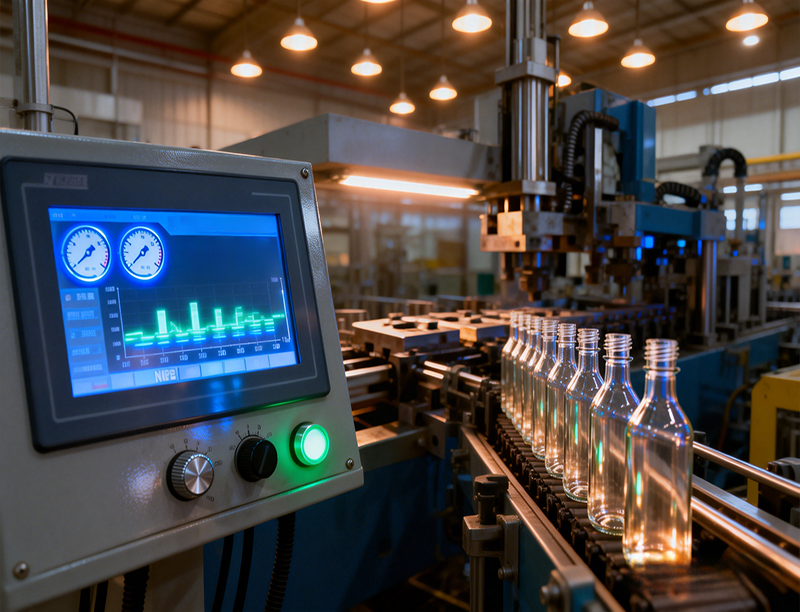
In practice, larger plunger diameters generally correspond to higher pressing pressures, while smaller plungers apply lower pressure. Different types of forming machines, due to variations in core cylinder diameters, apply different pressures even when producing the same bottle. Therefore, accurately calculating the glass pressure under varying plunger forces is essential to ensure consistency and quality across different machines. For example, NNPB bottles with a 19 mm neck diameter and PB bottles with a 58 mm neck diameter demonstrate that the glass in NNPB bottles experiences roughly three times the pressure of PB bottles, and the force required to open the initial mold is similarly about three times higher. This means that producing the same NNPB bottle on a smaller 108-type machine requires an increase of approximately 0.15 kgf/cm² (0.015 MPa) in pressing pressure to achieve the same glass force as on a 140-type machine. However, excessive pressure brings the initial mold close to its operational limit—approximately 700 kgf for a single drop and 1400 kgf for a double drop—raising the risk of uneven seams, cracks, and neck breakage. This demonstrates why NNPB bottles, with their smaller necks, require significantly higher precision in forming than standard PB bottles.
Meeting these challenges requires careful optimization of multiple production factors. Raising the drop temperature improves glass fluidity, allowing the parison to shape more easily and reducing the risk of pressure-related defects. Maintaining consistent drop weight ensures uniform parison volume, providing a stable foundation for subsequent blow stages. Optimizing the initial mold and plunger design distributes force more evenly, reducing peak pressures and minimizing the risk of cracks and mold wear. Finally, improving machine precision and stability ensures that pressing pressures remain controlled and consistent, safeguarding product quality across batches.
From the customer perspective, these technical considerations are not just internal production issues—they directly impact user experience and brand value. For beverage companies, neck strength and filling adaptability determine product safety during transport and retail handling. For pharmaceutical manufacturers, precision in parison and neck formation affects seal integrity and medication safety. For high-end cosmetic brands, precise bottle neck and body shaping ensures smooth filling, elevates the tactile and visual experience, and reinforces brand perception. By controlling forming pressure and optimizing parison shaping, manufacturers can deliver more consistent, reliable, and high-quality products, enhancing client trust and strengthening brand competitiveness.
In today’s market, where lightweighting, high-speed filling, and premium packaging demands are all increasing, pressure management is not merely a technical detail—it is central to bottle safety and aesthetics. Understanding how NNPB and PB bottles respond to forming pressures and parison shaping allows manufacturers to maintain efficiency while minimizing defects, ensuring uniformity and reliability. Lightweighting is no longer just about reducing weight; it is about achieving safe, beautiful, and dependable bottles through precise pressure control and meticulous parison management. This capability represents the core competitive advantage of advanced glass bottle manufacturers, reflecting both technical mastery and a commitment to customer value and brand excellence.