
Four Major Development Trends of the Global Glass Packaging Industry
A Systematic Transformation Driven by Technology Upgrades and Industry Consolidation
Against the backdrop of rapid evolution in the global packaging industry, glass packaging—one of the most established and mature packaging formats—continues to face strong competition from plastic packaging, paper-based containers, and emerging composite materials. In key application sectors such as food, beverages, pharmaceuticals, and premium cosmetics, market demand for packaging safety, sustainability, visual appeal, and cost efficiency is steadily increasing. In response, glass packaging manufacturers in developed markets including Europe, the United States, and Japan are accelerating technological innovation and industrial restructuring to enhance efficiency, sustainability, and competitiveness. Overall, the future development of the global glass packaging industry is primarily reflected in the following four trends.
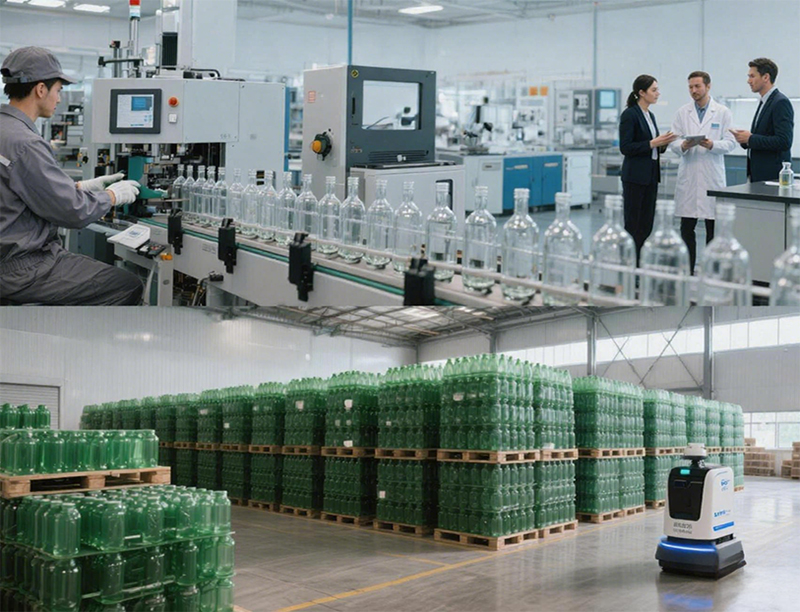
1. Energy Efficiency and Green Manufacturing: Reshaping Production Systems Through Low-Carbon Strategies
Energy consumption and environmental regulations are among the most critical factors influencing the competitiveness of the glass packaging industry. In developed countries, glass melting processes are increasingly moving toward energy-efficient and low-emission solutions. On one hand, manufacturers are adopting advanced combustion systems, waste heat recovery technologies, and intelligent temperature control systems to reduce energy consumption per unit of output while improving melting efficiency and glass quality. On the other hand, extended furnace campaign life and optimized furnace design are being implemented to ensure long-term stable operation and minimize energy losses at the source.
A particularly notable trend is the increased use of cullet (recycled glass), which has become a widely recognized and effective energy-saving approach. Internationally, the proportion of cullet used in glass packaging production commonly reaches 60–70%, with some advanced facilities actively moving toward the ideal target of nearly 100%. The use of cullet significantly lowers melting temperatures, reduces fuel consumption, and decreases carbon dioxide emissions, forming the foundation for “eco-glass” and circular glass manufacturing models. This trend highlights the long-term sustainability advantages of glass packaging in a low-carbon economy.
2. Lightweighting of Glass Containers: Balancing Performance and Cost Efficiency
Lightweight glass containers have become the dominant product type in developed markets such as Europe, North America, and Japan. Lightweight bottles are widely used in beer, beverages, condiments, and personal care products. Taking Germany as an example, some glass manufacturers report that lightweight, one-way bottles account for up to 80% of their total output. By reducing container weight, manufacturers can lower raw material usage and transportation costs while simultaneously reducing energy consumption and overall carbon footprint.
Lightweighting is not achieved simply by thinning glass walls, but rather through an integrated and highly controlled manufacturing system. Precise raw material formulation, stable control of the entire melting process, narrow neck press-and-blow (NNPB) technology, hot-end and cold-end surface coatings, and advanced online inspection systems collectively ensure that lightweight containers maintain strength, safety, and consistent appearance. In parallel, ongoing research into advanced surface strengthening technologies aims to further reduce container weight without compromising performance, providing valuable technical references for glass packaging producers worldwide.
3. Productivity Enhancement: Efficiency Gains Through Automation and Digitalization
With labor costs continuing to rise globally, improving labor productivity has become a strategic priority for glass bottle manufacturers in developed markets. The key lies in increasing forming speed and maximizing equipment utilization. High-speed forming machines with multiple sections and multi-gob configurations are now widely adopted, supported by large-capacity, high-efficiency furnaces capable of supplying stable, high-quality molten glass on a continuous basis.
At the same time, stricter requirements are placed on the consistency of molten glass quality. Gob temperature, viscosity, and uniformity must meet optimal forming conditions, which necessitates highly stable raw material composition and precise process control. As a result, many leading manufacturers rely on specialized suppliers to provide refined, standardized raw materials. In production management, digital control systems for thermal and process parameters have become standard practice, enabling real-time monitoring and optimal control throughout batching, melting, and forming processes. These technologies provide a solid foundation for high-efficiency, high-consistency production.
4. Increasing Industry Concentration: Scale and Synergy as Strategic Imperatives
As competition intensifies due to the emergence of alternative packaging materials, it has become increasingly difficult for individual glass packaging manufacturers to compete effectively using traditional operating models alone. To strengthen risk resilience and R&D capabilities, the global glass packaging industry is experiencing accelerated mergers, acquisitions, and strategic restructuring, leading to a steady increase in industry concentration.
Through expanded scale and optimized resource allocation, large glass packaging groups can achieve synergies in raw material procurement, technology development, capital investment, and market expansion. This enables lower overall costs, reduced disorderly competition, and enhanced responsiveness to high-end and customized market demands. Ultimately, this trend supports the industry’s ability to maintain a strong position in sectors with high regulatory and quality requirements, such as food safety, pharmaceuticals, and sustainable packaging.
Conclusion: Addressing Future Competition Through Technological and Structural Upgrading
In summary, the global glass packaging industry is undergoing a multi-dimensional transformation driven by energy efficiency initiatives, lightweight design, automation, digital manufacturing, and industry consolidation. Against the broader backdrop of sustainability and consumption upgrading, glass packaging is expected to retain a strong and irreplaceable position in the packaging sector, supported by its inherent advantages in safety, recyclability, and premium brand perception. For companies focused on long-term development and international markets, a deep understanding of—and alignment with—these trends will be critical to building sustainable competitiveness in the years ahead.